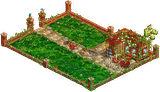
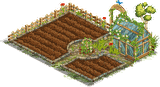
Nursery and seed breeding
Greta's nursery center brought two connected things to the farm - mysterious trees that grow from seeds on a free 1x1 plot, and seed breeding, where I turn material collected around the farm into special seeds with a different growth speed and yield. Special corn and wheat seeds are planted right in the nursery too, so the two mechanics are closely tied together. At first glance it looks like a minor thing next to the animals and the fields, but anyone who gets into the habit of harvesting, revealing and renewing trees regularly gets a steady stream of extra bonuses.
I see the nursery as a side system, but a rewarding one - it does not need daily attention the way fields and animals do, you just drop by now and then, harvest, reveal a new tree and clear out the spent ones. Seed breeding makes sense mainly for players who want to squeeze something extra out of the ordinary crops, because special seeds grow and yield differently from standard seed.
Greta's nursery center brings mysterious trees to the farm
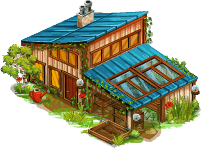
You will find the nursery center on the farm as Greta's addition to normal farming. The principle is simple - I plant a tree seed on a free 1x1 plot and watch it go from a sapling state into a mysterious form you cannot identify in advance. Only after the reveal do you see which tree you are actually getting.
A revealed tree then does one of two things - either it gives the farm a strong but temporary bonus, or it turns into an automatic producer of some sought-after resource. Saplings for planting can be restocked in the sapling shop right inside the nursery interface, or through the button to the in-game shop, if I want more trees on the farm at once.
Trees grow from seeds and after the reveal they either work as a booster or produce resources
Sapling quality is marked with stars - the game's help mentions one, two and three star trees. More stars signal a more valuable tree.
A tree that produces resources runs in production cycles - I can see how many cycles are left until the next harvest, and once it is done, it waits to be collected. A tree working as a booster behaves differently - it sits in a ready to start state, and after you launch it, it counts down the remaining charges of the active booster.
- A production tree shows the remaining number of production cycles, with the last cycle marked separately.
- A booster tree waits to be started, then runs as active with the remaining number of charges.
When I have a harvest ready on several trees at once, I do not have to click each one separately - the mass harvest button collects the yield from every tree that is currently finished.
A spent tree can be renewed, but repeated renewal costs more and more
Once a tree runs out of time or all of its charges, it does not disappear from the farm. It stays standing, it just keeps a small part of its happiness value. I use a refreshing item on it and the tree comes back to full strength, as good as new.
The other route is to remove the tree outright. For removing enough spent trees I get a reward - a so-called tree renewal, which I can then use on any spent tree I choose, and that tree is fully restored.
One thing is important here - if I keep renewing the same tree over and over, the price of the next renewal grows and I need more and more items. According to the game's help, that price is capped at a value of 5.
Seed breeding needs water and breeding material from the farm
Seed breeding is a separate nursery tab where I can open the recipe overview for each recipe and find out exactly what I will need. The basic resource is water - I pick it up as I go while harvesting and producing on the main farm, and when I happen to be short, it can be bought and used straight away for gold.
Besides water, the recipes call for breeding material - resources named after a specific crop or herb that turn up as a by-product of the work on the farm. From my own experience, material carrying a crop's name, corn for breeding for instance, belongs to the recipe for the special seed of that same crop.
| Where the material comes from | Examples of breeding material |
|---|---|
| Nursery | wheat, corn, barley, oats, cabbage, turnip, lamb's lettuce, alfalfa, meadow flowers, dandelion, lavender, aloe vera, jasmine, saffron, grass, vanilla |
| Winter garden | tomatoes, sage, rye, king salmon for breeding (with the eggs), peas |
| Tree nursery | soy, beetroot, onion, red cabbage, flax, cotton, parsnip |
These three places are connected, because seed breeding follows the same logic everywhere - collect water and the specific material, then make the improved seed according to the recipe.
Special corn and wheat seeds grow differently from ordinary seed

So far breeding has mainly given me two special seeds - corn and wheat. Both grow right in the nursery and, according to the description, they have a different growth speed and different yields than the ordinary seed of the same crop.
In practice I treat it as a way to spread my harvests out differently than standard fields allow - the special seed runs alongside the ordinary seed and indirectly raises my overall production without me having to expand the farm area.