Orchards and growing fruit
Orchards are production buildings where you load in fertilizer and, once the production time is up, you get fruit plus a by-product - leaves for the composter, or, in the case of the olive grove and citrus orchard, nectar for the apiary. In Big Farm you'll find them scattered across all the main farms - from apples and cherries right on the Main farm, through almonds and peaches on the Gourmet farm, all the way to olives and citrus on the Flower farm. I've put together an overview of every orchard, its stats and the fertilizer types, because this is one of the chains that runs on the farm practically non-stop.
Orchards are one of the most reliable production chains on the farm - once you've sorted out a steady supply of manure and fertilizer, they basically run themselves and feed plenty of contracts as well as the follow-up production in the bakery. It pays to build them gradually as they unlock, and above all to watch that you never run out of the raw material for the next cycle.
How orchards fit into production on the farm
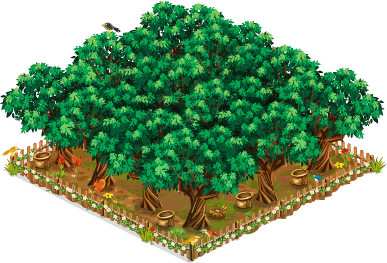
Besides their main product, the animal buildings on the farm also produce manure as a by-product. The manure goes into the silo, where it's turned into fertilizer, and that fertilizer is what feeds the orchards. With the olive grove and the citrus orchard the chain is one step longer - regular fertilizer is turned in the mixing plant into liquid fertilizer, which is the only thing these two orchards can process.
Along with the fruit you harvest, you always get a by-product too. With apples, cherries, almonds, peaches and the vineyard it's leaves for the composter, and with the olive grove and citrus orchard it's nectar for the apiary. So even though you plant an orchard mainly for the fruit, it also keeps your composter or apiary running.
Overview of the orchards by farm
| Orchard | Farm | Unlocks at level | Size | Cost at level 1 | Workers 1/max |
|---|---|---|---|---|---|
| Apple orchard | Main farm | 5 | 7x7 | 3 500 Dollars | 4/14 |
| Cherry orchard | Main farm | 15 | 7x7 | 9 000 Dollars | 4/14 |
| Vineyard | Main farm | 17 | 6x6 | 3 500 Dollars | 4/14 |
| Versatile fruit garden | Main farm | 29 | 7x7 | — | 6/16 |
| Almond orchard | Gourmet farm | 24 | 7x7 | 50 000 Dollars | 5/23 |
| Peach orchard | Gourmet farm | 29 | 7x7 | 120 000 Dollars | 7/17 |
| Olive grove | Flower farm | 50 | 10x10 | 150 000 Dollars | 13/25 |
| Citrus orchard | Flower farm | 61 | 10x10 | 520 000 Dollars | 10/22 |
As you can see, orchards unlock gradually across basically the whole game - from level 5 all the way up to 61, and every new farm adds another crop. Both the prices and the worker requirements grow with the size of the orchard and the order it unlocks in, so the olive grove and the citrus orchard are already a serious investment.
Fertilizer types and how they affect your yield

You can pour several kinds of fertilizer into every orchard and the results differ quite a bit. On the Apple orchard it looks like this - Fertilizer and Premium fertilizer both give the same 325 apples in the same time (3 hours), while Super fertilizer pushes that up to 390 apples over the same period. Speed fertilizer, on the other hand, is meant for quick short cycles - it gives only 33 apples in 18 minutes, but it comes in handy when you want to turn the orchard over fast instead of waiting out a long cycle.
Seaweed fertilizer (and its L version) is a category of its own - production finishes instantly and the yield is higher than with Super fertilizer. I treat it as the premium option for moments when I want the orchard done right away rather than waiting out a long cycle.
The same pattern holds at the other orchards, just with different numbers - at the olive grove, for example, plain Liquid fertilizer gives 65 olives in 6 hours, Liquid super fertilizer 78, and Liquid seaweed fertilizer 85 olives instantly.
Versatile orchards
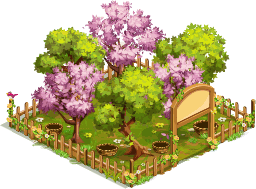
Besides the single-crop orchards, the Main farm also has the Versatile fruit garden, which can grow apples or cherries, and the game includes a Versatile fruit grove for almonds or peaches as well. You can switch the crop the orchard is set to produce, but only while it isn't producing anything - so you can't change your mind mid-cycle and suddenly go for something else.
It's useful mainly when you don't want to build two separate buildings just because you sometimes need apples and other times cherries for contracts.
What happens to the fruit next on the farm

Fruit from the orchards doesn't just end up in the market hall as a raw material - apples and cherries get processed further in the bakery into products like apple pie, apple turnovers, apple chutney, apple almond cake or cherry cookies. Apples and cherries can also be made into juice or jam, and cherries additionally go into cherry cider and cherry jam.
In practice that means an orchard is only the first link in the chain - it pays to plan the follow-up processing buildings along with it, otherwise the fruit just piles up in your storage.
Buildings and products mentioned in the text
 Apple orchardMain farm · from level 5 · 7 × 7
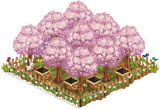 Cherry orchardMain farm · from level 15 · 7 × 7
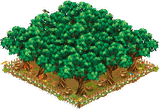 Olive groveFlower farm · from level 50 · 10 × 10
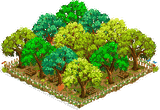 Citrus orchardFlower farm · from level 61 · 10 × 10
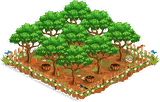 Almond orchardGourmet farm · from level 24 · 7 × 7
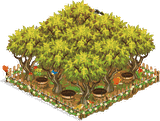 Peach orchardGourmet farm · from level 29 · 7 × 7
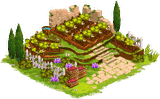 VineyardMain farm · from level 17 · 6 × 6
 Versatile fruit gardenMain farm · from level 29 · 7 × 7