Cooperative village
The cooperative village is the shared farm of the whole cooperative, all 21 buildings in it are built and upgraded together out of donated materials, not by a solo player. I'll find factories for raw materials, a storehouse, a job center with seasonal specialists, a research lab, a project office and a champions factory hooked up to the Champions League. It only works as well as the cooperative around it is active, without regular donations and votes the construction won't move anywhere.
The cooperative village makes sense mainly in an active cooperative where people bring in materials and vote regularly, because then it grows fast and pays everyone back in raw materials, specialists and Champions League rewards. In a passive cooperative with no donations it stays half-built and mostly just drags village satisfaction down with a penalty.
The village belongs to the whole cooperative, not just to me
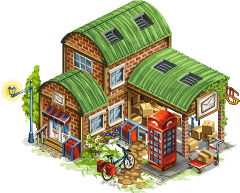
The cooperative village is shared ground for the entire cooperative, one set of buildings that all the members own and develop together, not me on my own the way I do on my farm. I'll find 21 different buildings in it, and practically the whole shared running of the cooperative goes through them.
Three special buildings keep the overview. The town hall shows the cooperative's description, level and stats, the information pillar compares my cooperative's score with all the other cooperatives and players in the game, and the post office is for reading messages and getting in touch with other players. The village has its own level and village experience points, so this part of the cooperative can be improved over the long haul too.
A new building only goes up from members' donations
The village can only build one building at a time, until the building under construction is finished, nothing else gets started. There are two ways to start construction.
- The cooperative leader and the deputies can start construction immediately.
- Without them, it's enough if at least a third of the cooperative's members vote to start.
The materials for construction have to be donated by cooperative members, and the whole cooperative should chip in, not just a handful of people. On top of that, the leader and the deputies can contribute Gold or Village dollars from the cooperative's account towards up to three types of material, and each such donation also lowers the total material requirement by 1 %.
Until the collection ends, I watch one thing, if nobody contributes, the building loses at least 1 % of the materials already gathered every day. It's enough for at least one cooperative member to donate at least one unit of material once every 24 hours and there's no penalty.
Once the materials are complete, the remaining construction time can be cut with up to ten Gold donations, and each donation takes 10 % off the remaining time. Anyone who donates more than once also gets their village experience points multiplied, so being generous pays off personally as well.
Two factories drive the raw materials and the storehouse keeps track
The raw materials for building and maintaining the buildings are produced by two factories. The wood and textile factory supplies wood, textiles and similar products, while the mineral and metal factory supplies bricks, minerals and metals. It's all held together by the storehouse, which keeps records of the village's materials and items and at the same time shows an overview of the village's current activity.
The storehouse distinguishes between personal amount, shared amount and online amount, and it's the first place we look in our cooperative before the next round of collecting gets going. A total of 41 different products pass through the village, from the raw materials out of both factories through building materials to items from the cooperative horse pasture or gifts from the adventurer.
The happier the village is, the fewer Village dollars and Gold go on production costs, and the other way round, as long as construction is running in the village, satisfaction takes a penalty. That's another reason not to drag construction out any longer than necessary.
| Building | Maximum level |
| Wood and textile factory | 101 |
| Mineral and metal factory | 101 |
| Village bank | 50 |
| Storehouse | 20 |
| Champions factory | 20 |
| Job center | 11 |
| Village pond | 11 |
| Cooperative horse pasture | 9 |
| Production stalls (fish, bakery, salad, ice cream, corn, fruit) | 5 |
| Oktoberfest | 2 |
The job center hires specialists for damaged fields
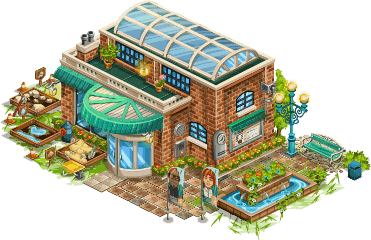
The job center is where I hire seasonal specialists to help out on the farm. They solve one specific problem, they repair plots damaged by hedgerow plants and at the same time increase the yield of the raw material extracted from such a field.
The specialists are split up by the type of damaged field and each one only handles their own kind.
- The drainage technician repairs waterlogged fields and supplies clay.
- The stone digger repairs stony fields and supplies boulders.
- The sand carrier repairs dry fields and supplies white sand.
I can hire at most three specialists of one trade at a time and each of them handles only one job at a time. For a season a specialist charges Village dollars or Gold, has a set number of jobs per season and a set working time per job, and on top of that various badges, for instance for fast work, high raw material yield or faster upgrading between seasons. The level of the job center building determines how high a level of specialist I can hire at all.
The research lab and the project office raise the village level
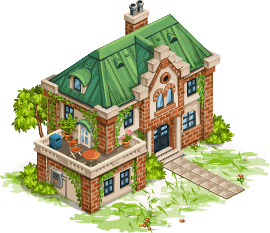
The research lab is the place for cooperative research, and if enough members get involved, the cooperative discovers and rolls out new benefits for everyone, not just for individuals. Alongside it, the project office keeps an overview of the cooperative's current projects, and by completing tasks in it the cooperative earns points and raises the level of its village.
Both buildings stand and fall on how many people in the cooperative are active, a lab without members taking part won't move research forward and projects without anyone completing tasks won't move the village level anywhere.
The champions factory and the village festival reward performance in the Champions League
The champions factory is charged by the cooperative's performance in the last Champions League, and to be able to charge it at all, the cooperative has to take part in the cooperative competition in the Champions League. At the end of the league, production of all the charged items, including those waiting in the queue, starts automatically.
Which items go into the queue depends on the Reputation points of the whole cooperative, while how many pieces of each unlocked item I actually produce is decided by my own multiplier, meaning my personal Reputation points. The cooperative XP of the champions factory, earned for the placing in the league, also permanently raises the factory's level and with it the production speed. Once the queue runs out, the factory has to be charged again in the next Champions League.
The village festival is a separate event, and when it's held in town, the cooperative completes challenges built around the strengths and weaknesses of rival cooperatives. The goal is to produce as many of the requested products as possible and earn challenge points and rewards that way.
Buildings on this farm
 Post officeCooperative village
 Advertising columnCooperative village
 Research laboratoryCooperative village
 Project officeCooperative village
 City hallCooperative village
 WarehouseCooperative village · 7 × 7
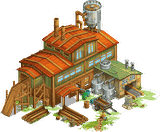 Timber and textiles factoryCooperative village · 13 × 11
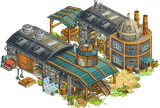 Minerals and metals factoryCooperative village · 13 × 12