Mistakes almost every beginner makes
Big Farm looks simple, but the first few weeks can really slow down even an enthusiastic player who spends gold and time in the wrong places. When I started out I kept clicking to speed up production, built houses without a single decoration and sold a lot of my harvest straight from the Farm management window without ever checking the market hall. Here are five things I would do differently on my first farm, when it comes to gold, happiness, selling, missions and the cooperative.
Spending gold on speed-ups instead of buildings
Gold is the premium currency in this game and dollars are the basic one. You need dollars for practically everything in the Build and Farm management menus, including production costs, and you earn them mainly by selling products and completing tasks. Gold, on the other hand, is there to skip waiting times, to take part in special events and to buy unique buildings or items for your farm, and you get it by buying it, by reaching a new player level, as a daily login bonus or as a reward for tasks.
When I was starting out I usually spent my first gold on finishing a production run instantly, because the waiting felt unbearable. Looking back, it would have been better to save it for a special building or a decoration. A waiting time is something you can simply sit out, but a good building on your farm keeps working for you all the time.
Apart from buying it or earning it as a reward, you also collect gold passively, into your piggy bank, simply by harvesting the products on your fields. The piggy bank fills up over time, though, and once it is full no more gold goes in, so it pays to check it regularly and empty it.
A house with no decorations costs you more in production
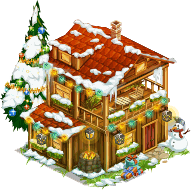
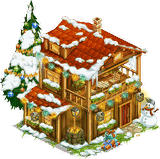
Your workers' happiness on each farm depends on the number of houses and decorations, and happiness is exactly what determines the production costs on that farm. Perfect happiness can wipe those costs out completely. Building a house just to raise the population is not enough, because without decorations happiness stays low and every production run you start in your production and processing buildings will needlessly cost you extra dollars.
Decorations also have to be built on the very farm where you want their effect, they belong to that farm alone, and the moment you put them away in your inventory they stop adding happiness. When picking one, it pays to watch the ratio of happiness to the space it takes up, because not every decoration makes equally good use of the same area. For comparison, here is what the game data says:
- Pumpkin wheelbarrow, 72 happiness, size 4x3, price 1 Gold
- Ancient stone slab, 39 happiness, size 4x3, price 10000 Gold
- Parrot tree, 45 happiness, size 4x3, price 20000 Gold
All three take up the same 4x3 space, but they give different happiness for different prices. Before you buy a decoration, it pays to do the math like this and see what earns you the most on that patch of land.
Selling cheap instead of taking contracts in the market hall
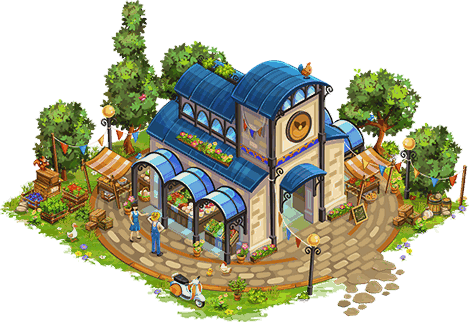
You can sell products straight from the Farm management window, but that is really just a quick way to move surplus. Customer contracts in the market hall pay better, because they take into account what your unlocked farms can actually produce, and customers also watch what you are growing and change their demands accordingly. A contract can ask for up to six different products, which you can add to it one at a time, and you deliver them by truck once you have everything ready.
Another mistake is turning contracts down for no good reason. Once you reject one you have to wait for the next customer, and the only way to shorten that wait is with gold. Letting a contract expire does not pay off either. You still get a reward, because another farmer delivers the missing products for you, but he takes his cut for it. It also pays not to keep the customers who walk up in front of the market hall waiting. The faster you fill their order, the more dollars you get, a completed order raises their happiness as well, and handling it quickly earns you an extra bonus on top.
Skipping missions costs you the points you need for machines
Missions are a race against other players for the best result within a time limit. They last 30 minutes and up to six players take part. Plenty of beginners avoid missions because they are a competition, but you need the reputation points and certificates from a successfully finished mission to build and upgrade farming machines and for the cooperative competition too, and there is no other way to get them.
If you jump into a new mission shortly after finishing the previous one, your reward includes bonus reputation points, so it pays to chain missions one after another. The difference between pausing and cancelling a mission in progress matters too. A paused mission can be finished later and you still collect its reputation points, while cancelling one loses you the reputation points you have already put in.
Farming on your own costs you the cooperative projects
A cooperative lets you chat with the other members, work on shared projects and research benefits that apply to the whole cooperative. A cooperative project only starts once a collection has been completed, with individual members contributing collectible items as soon as they have enough of them, and finishing a project successfully brings reputation points that level the cooperative up and push it higher in the rankings against the others.
Outside a cooperative you also miss out on research, which the cooperative leader or deputy starts once enough members sign up as researchers and which benefits every member at once when it is done. You are missing the shared tree as well, which grows with the cooperative's level and is watered by the members together, and the more people water it, the bigger the final reward.
Buildings and products mentioned in the text



Back to Guides.