Your first days on the main farm in Big Farm
In Big Farm, your start comes down to the order in which you put up your first buildings and whether you set up a working cycle between the field, the windmill and your animals right from the beginning. Here I describe what I built first, how I got feed production running and why it pays to watch happiness and your farmhouse from your very first hours of play.
What to build right at the start

At the very beginning you have a field, a chicken coop and a windmill available, and that is exactly the order in which it pays to get them going. The field is your basic patch of farmland measuring 8×6, at level 0 you build it for 250 Dollars, construction takes 15 minutes and you need 10 workers for it.
Right next to the field, put up the chicken coop (1500 Dollars, 15 minutes to build, 5 workers) – it is available from the start of the game and becomes your first source of steady income from eggs. Just as important is the windmill for 50 Dollars with a 30 minute build time and 4 workers, because without it you cannot turn your field harvest into animal feed.
Finish these three buildings and staff them with workers first, and only then start thinking about expanding the farm further.
How to get the corn, windmill and chicken coop cycle running
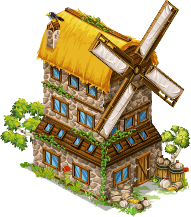
Click on the field, choose "Sow" from the menu and pick corn. Once you harvest it, either sell it straight away through the Farm management window, or process it in the windmill into chicken feed – that is the better option early on, because it keeps your egg production flowing.
- Sow and harvest corn on the field.
- In the windmill, start producing chicken feed from corn.
- Use the finished feed in the chicken coop and start producing eggs.
This cycle will keep repeating throughout the whole game, only gradually joined by more crops and more feeds for your other animals. Sell the eggs you collect through Farm management, or keep them for later recipes and missions.
Why you should keep an eye on manure and the silo

Every animal building, the chicken coop included, produces manure as a by-product alongside its main product. Manure piles up and needs to be stored – it serves as a raw material for further processing and growing on the farm. If you let your manure storage fill up or simply forget about it, you needlessly lose the manure your other animal buildings produce.
So keep an eye from the very start on how much manure your animals are making, and plan the building and upgrading of your silo accordingly, so that manure never overflows and you can keep using it as you go.
Adding the pigsty, cowshed and orchard step by step
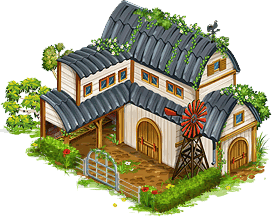
As soon as your farmhouse reaches the required level, more animal buildings open up for you. The pigsty unlocks at level 7 (2000 Dollars, 30 minutes to build, 4 workers) and needs pig feed, which you make in the windmill from cabbage. From level 13 add the cowshed (8000 Dollars, 1 hour to build, 6 workers) for cow feed made from wheat, and from level 17 the sheep pen (2000 Dollars, 30 minutes to build, 4 workers) for feed made from oats or meadow flowers.
Every new animal building means you also have to sow the matching crop on your field – cabbage for pigs, wheat for cows – so split your field according to which animals you are working hardest at the time. Later on an orchard joins the farm, where you will pick apples or cherries, but hold off on that until both your pigsty and cowshed are running at full speed.
How to avoid wasting gold

Big Farm has two currencies. You need Dollars for the everyday running of the farm – building, upgrading and production costs – and you earn them mainly by selling your own products and from missions. Gold is the premium currency, which you either buy or receive for reaching a higher level, as your daily login bonus and as mission rewards.
Early on, keep your gold to one side. You build the basic field, chicken coop and windmill purely with Dollars, so you will not lose any gold at all. Watch out for the upgraded version of the field, the so-called fertile field, whose construction and upgrades are paid for with gold – until you have saved up enough for more important things, the ordinary field will do just fine. Save your gold for the moment when you are genuinely short of space or time, not for rushing things that will finish on their own soon anyway.
When to upgrade the farmhouse and why happiness matters

The farmhouse determines how fast you build on the farm, it houses some of your workers and it gives you storage space. At its lowest level it holds 22 workers with a storage capacity of 200, upgraded to maximum it holds 44 workers with a capacity of 850. It is always worth upgrading when you have nowhere to house the workers for new buildings, or when storage is holding back the sale of your crops and products.
At the same time, keep an eye on happiness on the farm – it grows with the number of houses and decorations and directly affects your production costs for everything you make. The happier your workers, the cheaper your production, and at perfect happiness you pay no production costs at all. So place cheap decorations on your farm right from the start, not only once you have space to spare.
Buildings and products mentioned in the text







Back to Guides.