Obsidian farm
The obsidian farm is a standalone location where I head off on an expedition into exotic nature - an icy volcano, a slice of jungle and new animals. It works as a smaller farm with its own economy (obsidian and obsidian dollars) and its own research, the results of which feed back into the productivity of my farms on the mainland.
The obsidian farm is worth it for anyone who wants to squeeze more out of their main farms on the mainland - it unlocks consumables that genuinely raise productivity there. It is a long haul, though, because I work my way up to the buildings and recipes step by step through the research tree.
The obsidian farm is an expedition that strengthens the farms back on the mainland
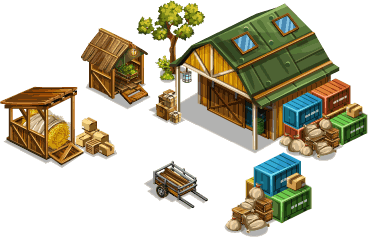
The story of the location is built around an expedition - I find exotic animals and plants here, an icy volcano and a piece of jungle. But the point isn't just sightseeing: according to the game's help text, this location lets me produce powerful consumables that improve the productivity of my farms on the mainland.
According to the current version of the game, the first buildings on the obsidian farm (cabins, storehouses, fields, orchards and animal pens) only unlock at farm level 114. The exception is the Obsidian market, which I have available from the start.
The farm runs on two currencies of its own
I need obsidian purely to cover research costs - without it the technology tree doesn't move an inch.
Obsidian dollars are what I pay for putting up buildings and for production costs directly on the obsidian farm. I earn them by producing goods at the market and filling contracts.
- Obsidian - the currency for research
- Obsidian dollars - the currency for buildings and production on the obsidian farm
There are eighteen buildings to put up on the obsidian farm
The buildings fall into the same categories as on a classic farm - houses, storage, production, fields, orchards and animals, plus the main building and the special Obsidian market.
| Building | Category | Price of level 1 | Max. level |
|---|---|---|---|
| Adventurer's homestead | Main building | — | 6 |
| Obsidian market | Special | — | 1 |
| Cabin | Houses | 2500 Obsidian dollars | 6 |
| Fancy cabin | Houses | 1500 Gold | 6 |
| Storehouse | Storage | 10000 Obsidian dollars | 6 |
| Spacious storehouse | Storage | 4000 Gold | 6 |
| Feed kitchen | Production | 8000 Obsidian dollars | 6 |
| Winter garden | Production | 100000 Obsidian dollars | 6 |
| Botanical workshop | Production | 100000 Obsidian dollars | 6 |
| Volcanic field | Fields | 4000 Obsidian dollars | 6 |
| Fertile volcanic field | Fields | 2000 Gold | 6 |
| Plum orchard | Orchards | 6000 Obsidian dollars | 6 |
| Dragon fruit orchard | Orchards | 6000 Obsidian dollars | 6 |
| Ostrich pen | Animals | 10000 Obsidian dollars | 6 |
| Lizard pen | Animals | 10000 Obsidian dollars | 6 |
| Orca pool | Animals | 10000 Obsidian dollars | 6 |
| Insulated composter | Production | 100000 Obsidian dollars | 8 |
| Efficient feed kitchen | Production | 4000 Gold | 6 |
The price list shows the same pattern as on the mainland - every basic building has a faster but pricier variant for Gold (Fancy cabin, Spacious storehouse, Fertile volcanic field, Efficient feed kitchen). The one that stands out is the Insulated composter, the only building here that can be upgraded all the way to level eight.
Orchards, fields and animals work a bit differently here than on the mainland
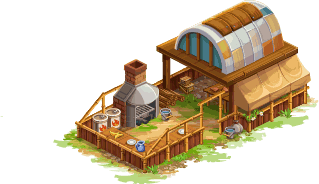
Orchards on the obsidian farm don't need fertilizer to get going - compared to the mainland that is a noticeable relief, so manure isn't something I have to deal with right at the start.
On top of that, the animals and orchards in this environment also produce different by-products. Among the resources I collect here are Obsidian leaves and Obsidian manure.
From the basic fields, orchards and pens I get Rye, Saffron, Sage, Tomato, Plum, Dragon fruit, Ostrich, Lizard, Orca and King salmon. Special seeds and eggs (special rye seeds, saffron seeds, sage seeds, tomato seeds, special king salmon eggs) then give me higher-quality resources, and in the feed kitchens I process feed for the ostriches, lizards and orcas.
Research opens up further buildings and resources for the mainland
Clicking an individual research in the technology tree shows me its details. The effect of a research is typically one of three - unlocking another building on the obsidian farm, a recipe for obsidian consumable goods, or a building I then put up on the mainland.
That last category is, from my point of view, the main reason to get into the obsidian farm at all - the research here has an impact on production across the whole mainland.
The obsidian goods I make get sold and used to fill contracts at the Obsidian market, which brings obsidian dollars back in for developing the location further.
Buildings on this farm
 Obsidian marketObsidian farm · 1 × 1
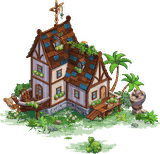 Adventurer's lodgeObsidian farm · from level 114 · 10 × 8
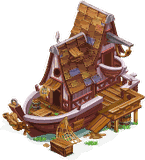 CabinObsidian farm · from level 114 · 5 × 5
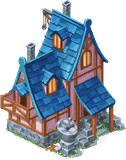 Fancy cabinObsidian farm · from level 114 · 5 × 5
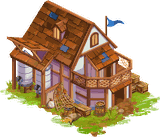 WarehouseObsidian farm · from level 114 · 7 × 6
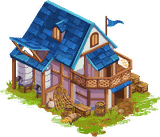 Spacious warehouseObsidian farm · from level 114 · 7 × 6
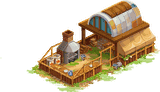 Feed kitchenObsidian farm · from level 114 · 6 × 10
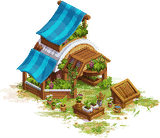 ConservatoryObsidian farm · from level 114 · 7 × 5