Nursery and forest trees
A farm isn't only about fields and animals, a bit of the space belongs to the forest and the nursery as well. Alongside ordinary stumps, special trees grow around the place, such as the beech, the cork oak, the hibiscus or the exotic tree, each with a resource of its own. The nursery, in turn, is where I breed my own seeds, which grow at a different speed and give a different yield than ordinary seeds.
I treat the nursery and the forest trees as an extra source of resources for the tannery, the dyeworks and the spinning factory, not as a goal in themselves - they mainly pay off for anyone who works those workshops regularly and needs their own source of dye, fiber or vegan leather.
The nursery lets me breed my own seeds
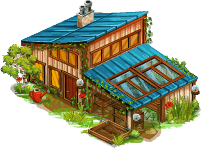
The nursery is the building where I breed special seeds. According to the game's own tooltip, these seeds have a different growth speed and different yields than ordinary seeds, so they let me partly adjust how fast and how much I harvest from a field or a bed.
In the game I've come across three versions of the nursery - a general one, one for crops and one for flowers - but they all work on the same principle of breeding your own seeds.
Personally, I use the nursery mostly for the crops I grow most often, because even a small difference in growth speed or yield adds up a lot over repeated harvests.
Forest trees supply resources for the tannery, the dyeworks and the spinning factory
Besides ordinary stumps, special trees grow on the farm too. Each of them gives a different resource that I then process in a particular workshop.
- Beech - special mushrooms, in the tannery I turn them into vegan mushroom leather.
- Cork oak - special bark, in the tannery I turn it into vegan cork leather.
- Exotic tree - blue beetles, in the dyeworks I turn them into blue dye.
- Hibiscus - special flowers, in the dyeworks I turn them into red dye.
- Birch - leaves, in the dyeworks I turn them into yellow dye.
- Ash tree - seeds, in the spinning factory I turn them into fiber.
- Kapok tree - fruit, in the spinning factory I turn it into fiber.
So the beech and the cork oak lead to the same type of resource - vegan leather, just in a different variety. The birch, the hibiscus and the exotic tree between them cover three different colors for the dyeworks.
A stump hides a tree you only recognize once you've grown it
When I chop down a tree, a stump is left behind. Until I grow it again, the game only shows it as an Unknown tree - it's only after growing it that I find out what species came out of the stump.
The in-game text on the stump also mentions that trees in general provide resources essential for making horse equipment, so even an ordinary, so far unidentified tree has its place on the farm.
I get by with the trees that match the workshop I'm supplying
There's no point in having one of every kind of tree on the farm, I'd rather pick a few based on which workshop I'm working hardest at the moment.
- For vegan leather in the tannery I stick to the beech and the cork oak.
- For dyes in the dyeworks, a combination of birch, hibiscus and exotic tree is enough to cover yellow, red and blue.
- I keep the ash tree and the kapok tree for fiber in the spinning factory.
The nursery I only get to as a second step, once I know which seeds I harvest so often that breeding my own variety is worth it.
Buildings and products mentioned in the text
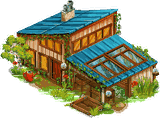 NurseryMain farm · from level 19 · 7 × 5
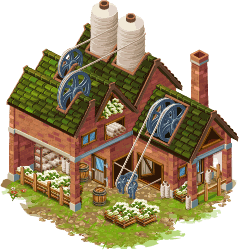
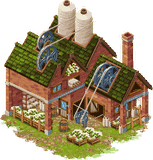 Spinning factoryGourmet farm · from level 19 · 7 × 6
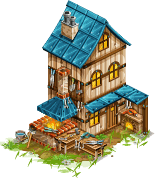
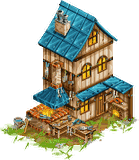 WorkshopMain farm · from level 19 · 4 × 5
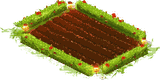 FieldMain farm · 8 × 6
 Tree seedsSapling · Main farm
 Yellow dyeProcessed product · Gourmet farm
 Blue dyeProcessed product · Gourmet farm
 Red dyeProcessed product · Gourmet farm